Meet the Science Teachers

Monday, April 29, 2019

Curriculum update - 6th and 7th grade science

7th-grade science students recently learned about communication and transportation systems. During this communication unit, students examined the key components of a communication system (source, encoder, transmitters, receiver, decoder, and storage) and identified which systems were best suited for a variety of scenarios.


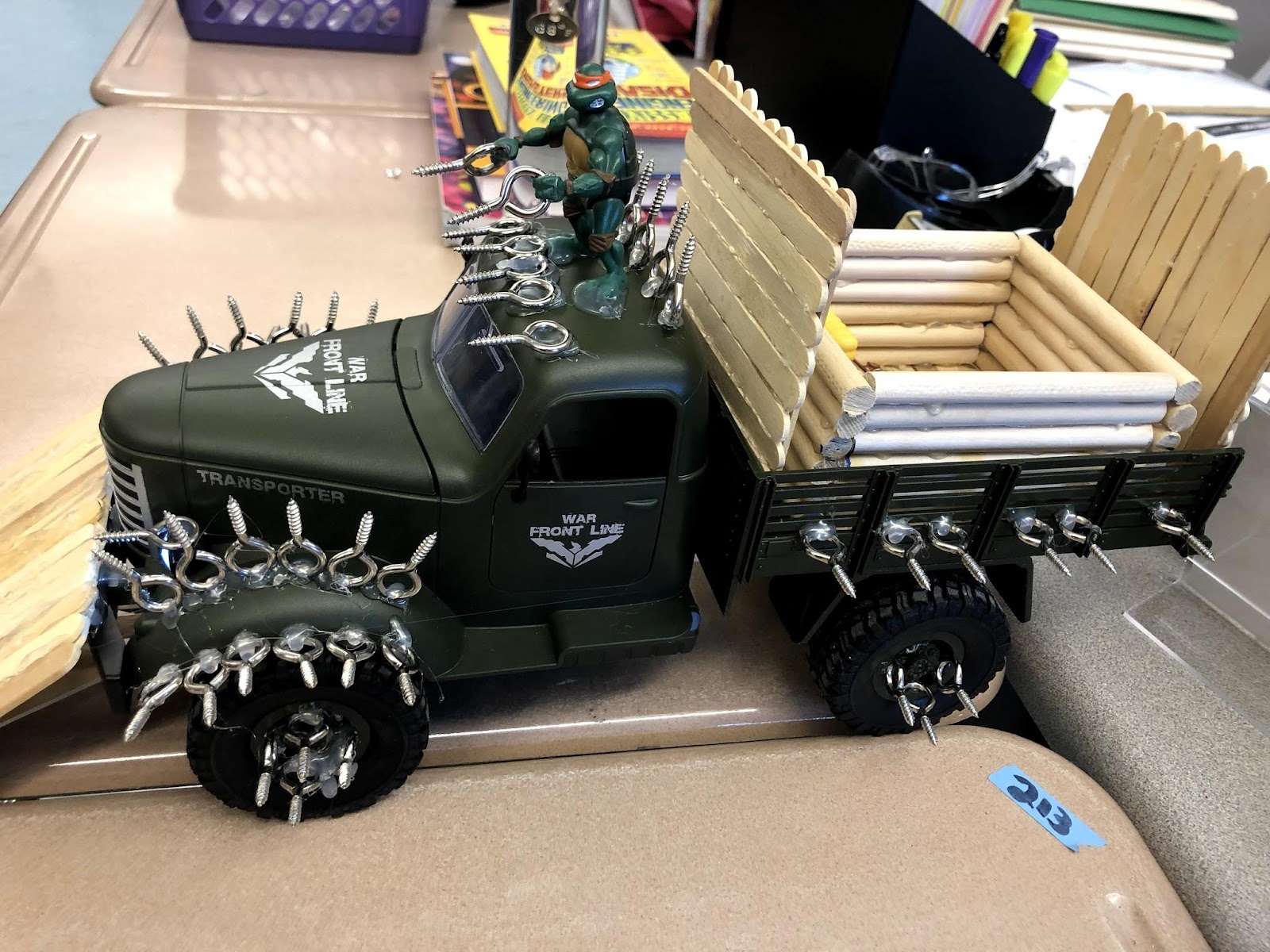
In our transportation unit, students examined how transportation systems are designed to move people and goods using a variety of vehicles and devices. Additionally, students identified subsystems of a transportation vehicle. After reviewing transportation subsystems and the universal design process, students created a modification to a transportation vehicle to transport an 8ft tall snowman in July, in one piece, without melting!
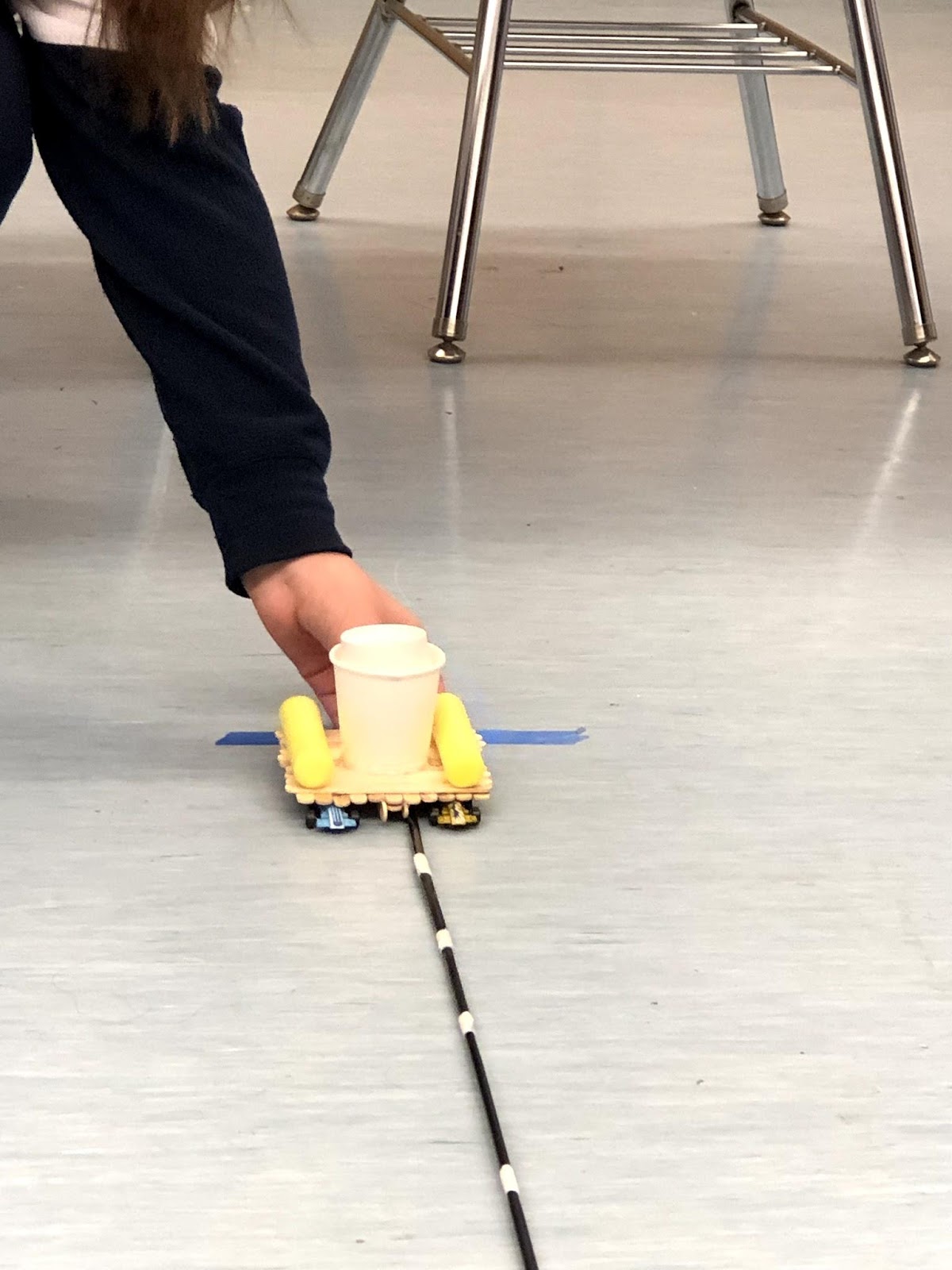
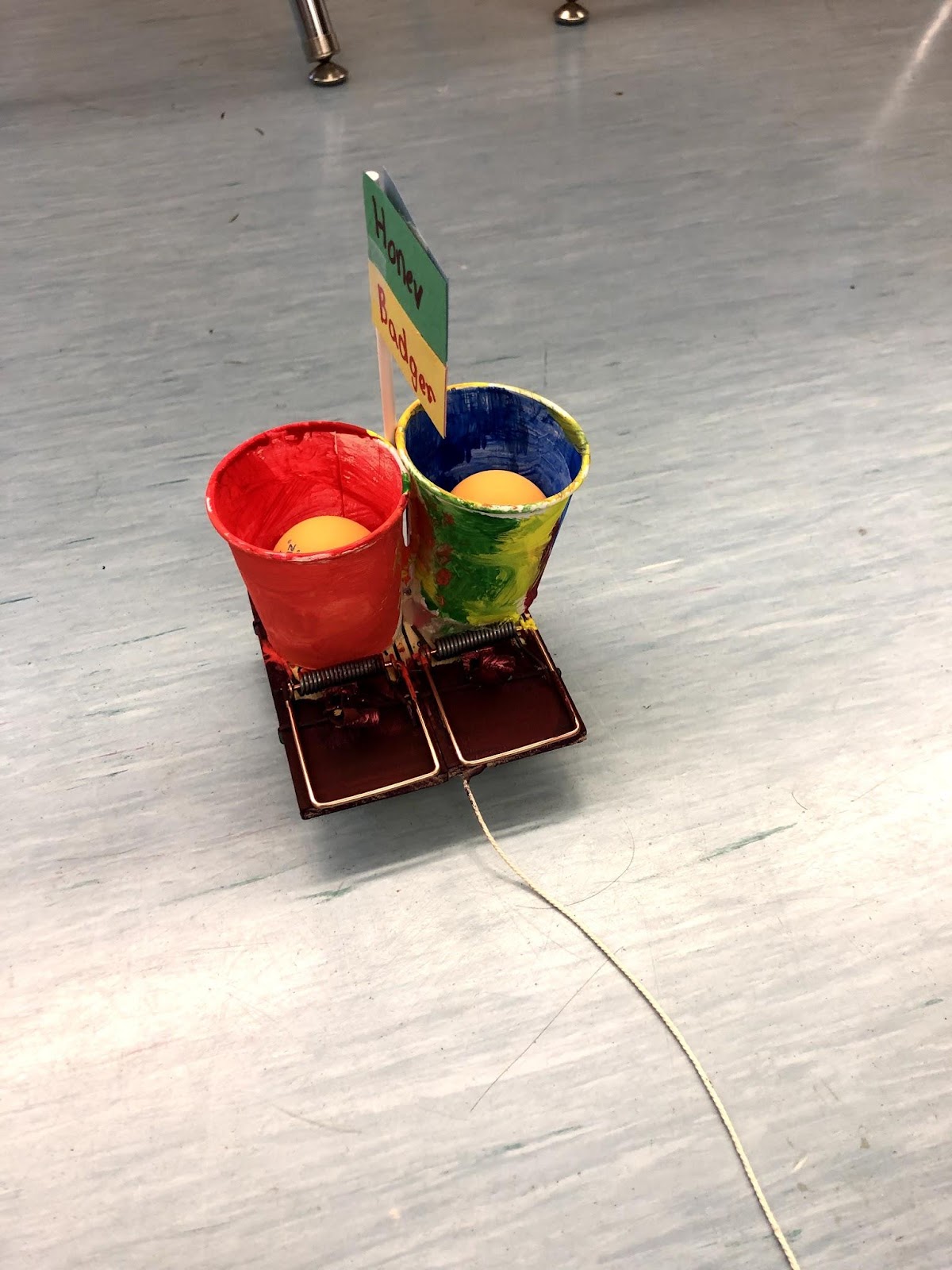
The engineering portion of this unit challenged students to use the concept of systems engineering in order to model inputs, processes, outputs, and feedback to design a prototype to move goods across the classroom.

.  


In March, 6th-grade students wrote a letter, a speech, or an argument as Alfred Wegener's attorney, that used evidence to support Wegener's theory of continental drift. These creative pieces of writing were great - ask your students to see theirs!
More recently our 6th-grade students focussed on how fossils and layer of rock tell us the story of Earth's history. Students successfully looked at images of rock layers and could tell you what formed first, second and third and if there was an intrusion or a fault that cut across the layers. In addition, students could assess given fossils and indicate what the environment was like at the time, how it changed and what index fossils tell us about how old other fossils and sediments are based on their location!


Curriculum update


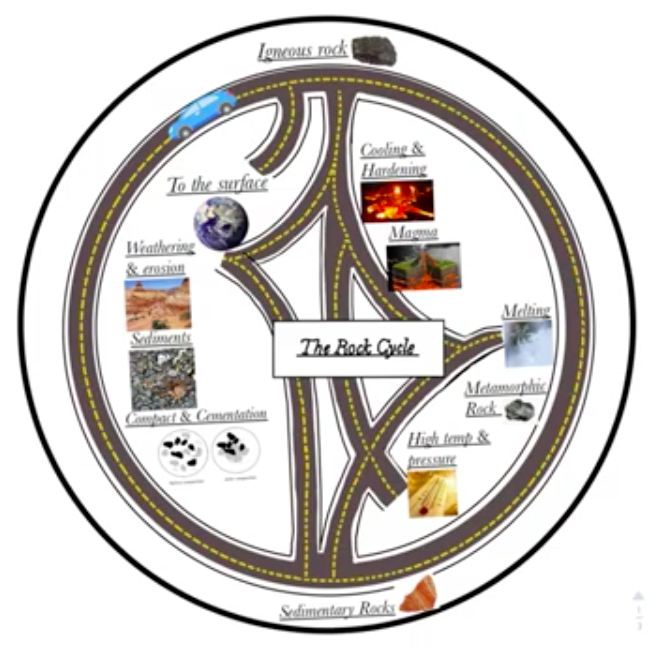
In March the 8th grade is working on finishing up their units on Earth Science.  The students are studying the rock cycle, weather, and global climate change. Students created water cycle videos, analyzed an Ice Age preview to determine how scientifically accurate it was.  Lastly, students will examine changes on Earth due to climate change using a NASA app.  In Intro to Engineering, the clusters are entering their final rotation of Genius Hour, EV3 robots and Solar Cars.  

Sunday, April 28, 2019

High School Science Curriculum Update


APES
The AP Environmental science class recently explored exposure to toxins in our lives including hidden fragrances - everyone should watch the movie "Stink". We had an enlightening presentation by Medfield parent Erica Reilly on hidden toxins in household items and what we can do about it. The environmental impacts of air and water pollution are also on our agenda - all of this while preparing for our upcoming AP exam.

BIOLOGY
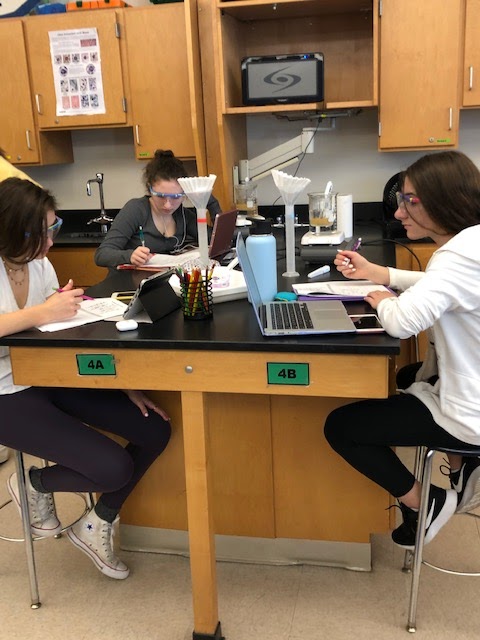
In Biology I students learn about the scientific method and how to write a good lab report. Recently students had the opportunity to apply what they learned by designing their own experiment to determine the effect of a variety of variables on enzyme activity. Students conducted their experiment, then organized and analyzed their data to determine what the effect of their chosen variable e.g. temperature, pH, or enzyme concentration, was on the action of their enzyme.


Tuesday, March 26, 2019

MHS Science Olympians!

Congratulations to our science olympiad team on their 1st place award (gold medal) in Write it-do it at the State Science Olympiad meet last week at Framingham State University.  Our team also placed in the top ten for the Chem Clue event. With approximately 55 schools in attendance and 25 events, this was quite the accomplishment for our small group of dedicated science Olympians and their advisor, Ms. Adams!


Friday, March 22, 2019

Science Happenings

STEAMers Showcase 2019

On Wednesday, March 6th, students at Blake Middle school participated in our STEAMers showcase. Students were excited and eager to share their passion with the attendees who were equally interested in learning what motivates and excites our middle school students!
Many thanks to everyone who participated and helped out - our AP Biology volunteers, Blake administration and the many parents and teachers who facilitated this event.  Most of all we would like to thank out students scientists/engineers/problem solvers for their enthusiasm, determination and outstanding participation!

We are looking forward to seeing our STEAMers again at our Design your Learning Day, 2019               #medfieldDLD!!

Participants not in the picture - Carl Kirchoff and Jim Kemp

Participants in the picture - Caeli Sheehan, Maeve Kennedy, Everett Lybrand, Michael Ianone, Owen McEntee, Ellayna Geraigery, Kaitlyn Nicotera, Ned Teany, Nikhil Verghese, Noah Marchand, Suran Warnakulasooriya, Sasha Mazurenko.


High School science curriculum update

9th-grade Biology students recently learned about how living things use and produce energy.  As part of a photosynthesis unit, students designed and conducted their own experiments to determine the effect of different factors on the rate of photosynthesis.


Currently, Biology students are learning about their DNA making models and creating videos to show how DNA replicates!!!


Anatomy & Physiology students are learning about the structure and functioning of muscles.  Students tested rabbit muscle to determine the effect of different solutions of ATP and ions on muscle contraction.  Students also built sarcomeres using pipe cleaners to show how the proteins, actin, and myosin are arranged within the muscle cell.


Blake curriculum update


After finishing with their Universe projects, the 6th-grade science students started to work through the relationship between the Earth, Moon, and Sun that cause the phases of the Moon and eclipses. Students used several different types of models to help them understand these relationships and to figure out that phases are based on our perspective from the earth that determines how much of the lit side of the moon we see as it makes its way in its revolution around Earth each month. Ask your student why we do not experience a lunar eclipse every month!!
On completion of our Astronomy unit, students left space and returned to Earth to take a journey back in time, geologic time that is.  We spent a couple of days making sure that students had two takeaways, that the Earth is very old (4.5 billion years old) and that humans have been around for a very tiny amount of that time (200,000 years).  After February vacation we picked up with the evidence that supports continental drift: fossils, land features, and climate.


February found seventh-grade students building again! They started the month by learning about bridges and the forces at work in different types of bridges.  To help understand the forces, students participated in simulations to feel tension and compression.  They used their head as the tower to model cable-stayed bridges with a string tied to their arms. 
Using their understanding of forces in bridge design, students then designed and build their own bridges.  Their bridge design needed to span 30 cm, hold at least 1000grams and of course had to be stable.  the bridges held well over the limit set by the seventh-grade science teachers! Students also tracked their use of materials to determine if their bridge came in under, or over budget.  Teams presented their bridges to the class and students completed a Claim, Evidence response writing assignment using the data to support their claim of which bridge in the class had the best design. 


In science exploration, students continue to be busy keeping the water in the tanks clean for the trouts.  Frequent water changes are a way of life now that the trout are eating.  In between water testing and water changes, students are learning about the structure and function of the internal and external anatomy of trout along with the life cycle of trout!

Eighth-grade science students recently completed a unit on Physics, centered on Newton's laws of Motion.  The students participated in some engaging new labs freshly assembled for this new 8th-grade science unit. One such lab involved launching balls of various masses from a ramp while taking measurements and analyzing the motion of the object. The colliding toy cars lab was a great success with students taking slow-mo video fo the collisions while narrating and labeling their videos as an indicator of the understanding of Newton's third law!